
Transcript
Announcer:
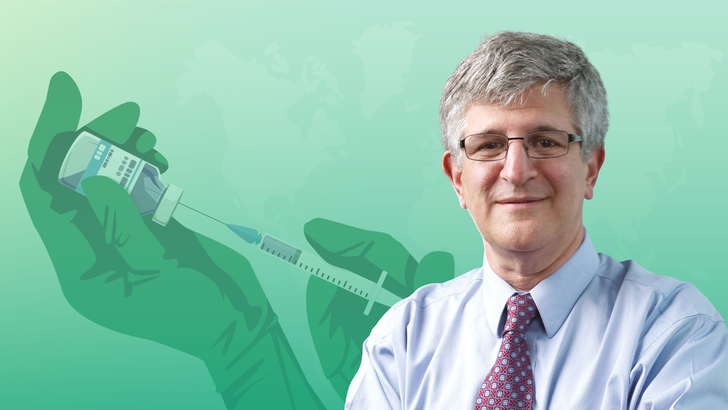
Welcome to VacciNation on ReachMD. On this episode, we’ll hear from Dr. Paul A. Offit, who’s the Director of the Vaccine Education Center and a Professor of Pediatrics in the Division of Infectious Diseases at Children's Hospital of Philadelphia. He’ll be sharing key clinical strategies for vaccinating children against diseases like diphtheria, tetanus, pertussis, hepatitis B, and polio. Here’s Dr. Offit now.
Dr. Offit:
Polio certainly is rare. We eliminated polio from the United States by 1979. Nonetheless, there was a case of polio in a 27-year-old man who never left this country in 2022. And when you looked in the wastewater, you saw that poliovirus was there. And in fact, when you saw that he was paralyzed—only one of roughly 2,000 people who are infected with that virus are paralyzed—he was the tip of a much bigger iceberg. So we can’t be complacent even about polio. It’s also true that diphtheria is relatively rare and that tetanus is relatively rare, but they can occur. And if you let immunization rates drop low enough, as happened with the Soviet Union, for example, when they had huge outbreaks of diphtheria, you can pay a price.
Now, some diseases aren’t rare. Pertussis, or whooping cough, is not rare at all. It’s fairly common. And just this year alone, we’ve had 10 little babies die from pertussis, and this year’s not finished. Last year, we had only two children die from pertussis, so pertussis is around. And hepatitis B virus still causes chronic infection in about 2 million people in this country, and they are contagious to others. So I think for all those reasons, we don’t need to let our guard down.
The goal is to make sure that children are immune when they are likely to come into contact with these viruses or bacteria. So for example, children are inoculated at two months, four months, and six months of ages with vaccines to prevent against rotavirus, which is an intestinal infection. It is common in the 6 to 24-month-old. Same with bacterial infections like Haemophilus influenzae B, which is a cause of sepsis, bloodstream infections, meningitis, and pneumonia. Same thing with pneumococcus, which causes the same sorts of symptoms. So I think we need to give vaccines when they’re most likely to protect them.
On the other hand, if you look at, for example, a disease like human papillomavirus, which can cause cervical cancer and other cancers, usually that’s acquired via sexual activity, so we tend then to vaccinate children in adolescence and not necessarily as children. So we really time the vaccines based on when children are most likely to be exposed to and suffer these infections.
I think, largely, vaccines are a victim of their own success. I think we don’t see many of these infections anymore. I’m a child of the 1950s. I had measles. I had mumps. I had German measles. I had chickenpox. I had all those diseases. I suffered all those diseases, and people would occasionally be hospitalized and die from those diseases. But we eliminated measles in the United States by the year 2000, even though that was a virus that infected 3 to 4 million children a year and caused 48,000 hospitalizations and 500 deaths every year. Yet many people have never seen that disease, and so I think it’s not only that we eliminated the disease, but we eliminated the memory of the disease, and for that reason, people let their guards down. Also, when people are looking for a reason not to vaccinate, it’s not hard to find bad reasons on the internet where vaccines are claimed to be unsafe in a variety of ways that aren’t true.
So I think it’s really a combination of things. I think 1) vaccines are a victim of their own success; 2) I think people sometimes are looking for reasons not to vaccinate because they don’t understand why they need to get all these vaccines. And I do think that we do ask a lot of parents in this country. I mean, we ask them in the first few years of life to prevent about 14 different diseases. That can mean as many as 28 inoculations during that time. It can mean as many as five shots at one time to prevent diseases most people don’t see using biological fluids most people don’t understand, so I think it’s a natural kind of pushback, and I think we need to be sympathetic to that. But it’s still important to get vaccines because every year children suffer, are hospitalized, and die from these diseases.
Announcer:
That was Dr. Paul A. Offit sharing his insights on how we can proactively protect children against diphtheria, tetanus, pertussis, hepatitis B, and polio. To access this and other episodes in our series, visit VacciNation on ReachMD.com, where you can Be Part of the Knowledge. Thanks for listening!
